

- What Is a Washer?
- Why Are Washers Important?
- Types of Washers
- Product Overview
- Benefits of Using Quality Washers
- Applications and Use Cases
- Washer Types at a Glance
- About EASCO Fasteners
- Conclusion
A practical guide to the small components holding big industrial systems together
Nobody thinks much about washers — until something starts rattling loose on a production line, and suddenly everyone remembers why this flat little ring exists. Structural steel, an electronics panel, heavy machinery — doesn't matter which. The humble Washers component sits quietly under the bolt head, doing a job nothing else really can: spreading load, damping vibration, protecting the surface underneath. Skip it, and even a bolt torqued to spec works itself loose eventually. This piece walks through what washers actually are, the types worth knowing, and where each variant genuinely earns its place on a build sheet.
What Is a Washer?
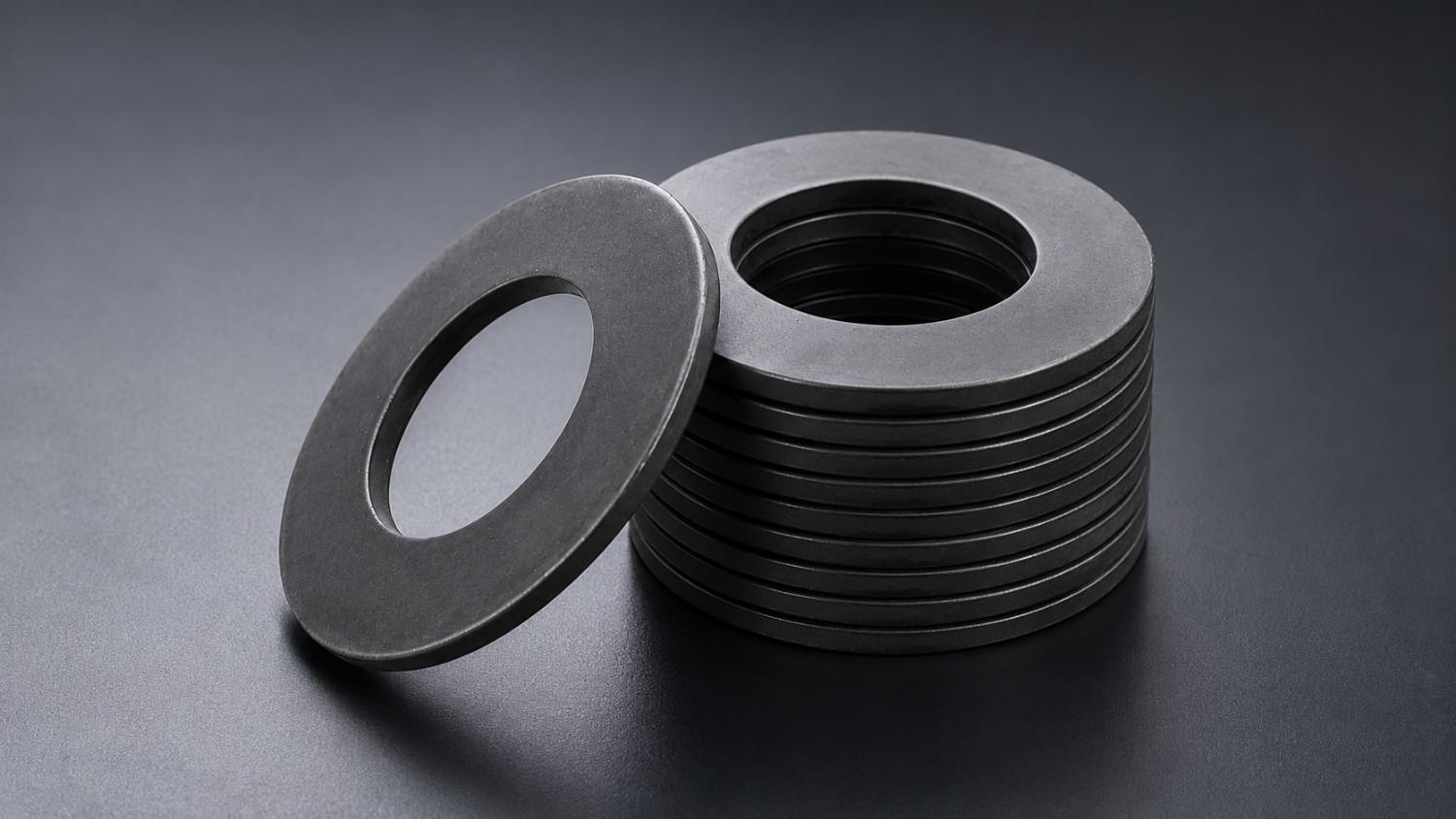
Simple enough on paper — a thin, flat disc with a hole punched through the middle, sitting between a nut, bolt head, or screw and whatever surface it's fastening. Distribute the pressure evenly. That's the whole point. Get the sizing or material wrong, and bolts loosen, mounting surfaces crack, joints fail under vibration nobody accounted for. Washers don't headline the conversation around Industrial Fasteners — bolts and nuts get all the attention — but pull one out of a critical joint and watch how fast things go wrong.
Why Are Washers Important?
Leave the washer out, and the bolt head bears all that clamping force directly against a surface it was never designed to take — a concentrated point-load instead of something spread out. Give it time and the surface deforms. The joint loosens. Then the whole assembly starts working itself apart, usually right when you can least afford it. A washer spreads that same force across a wider area, cushions vibration, and sometimes adds electrical insulation or extra corrosion protection on top. Small part. Outsized job.
DID YOU KNOW?: Roman and medieval builders used washer-like discs to stabilize wooden joints in siege equipment — centuries before threaded fasteners as we know them existed.
Types of Washers
Here's the thing — not every washer does the same job, and pairing the wrong one with a critical joint is a mistake that's surprisingly common, and just as easily avoided:
- Flat Washers – the standard load-spreading disc. Goes under a bolt head or nut whenever it needs a smooth, even bearing surface.
- Spring Washers – curved, sometimes split-ring. They add tension so things don't loosen under constant vibration.
- Lock Washers – toothed or serrated, built to bite into the mating surface. Keeps a joint firm even with repeated movement.
- Stainless Steel Washers – naturally corrosion resistant. First choice for outdoor, marine, or chemical-heavy environments.
- Heavy Duty Washers – thicker, wider, made for high-load structural work that would chew through anything flimsier.
- Bolt Washers – shaped to match a particular bolt head. Gives it a snug seat instead of a loose one.
Each of these Metal Washers variants is solving a different mechanical problem underneath the surface — so matching the washer to the load, the environment, and the fastener itself isn't just good practice, it's kind of the whole game.
Features to Look For
Before placing a bulk order, run through this — it saves headaches later:
- Material grade — carbon steel, stainless, or alloy, picked based on load and the environment it'll sit in.
- Surface finish — plain, zinc-plated, or passivated, depending on the corrosion resistance you actually need.
- Thickness and outer diameter, matched to the bolt or screw precisely, not roughly.
- Hardness rating, critical once you're dealing with high torque or constant vibration.
- Tolerance consistency — inconsistent batches mean uneven clamping, and loose joints down the line.
TRIVIA: The word "washer" likely traces back to an old term for flat discs used in early machine cleaning and finishing work — fastening came later.
Product Overview
Good Fastener Washers are built to tight tolerances, with material chosen for exactly what it'll face — vibration, corrosion, heat, heavy compressive load. Established Washer Manufacturers in India generally lean on cold forging, precision punching, and stamping, then heat treatment and surface finishing, just to keep every batch consistent. Small washers for electronics work, oversized discs for structural steel — different scale, same rule: accuracy first, everything else follows.
Benefits of Using Quality Washers
Understand the benefits of using quality washers:
- Spreads load evenly so the mounting surface doesn't take long-term damage.
- Cuts the risk of loosening from vibration or thermal cycling.
- Stretches out the service life of bolted joints.
- Helps hold off surface corrosion, assuming the material grade's right for the job.
- Means less re-torquing down the road.
Well-made Industrial Washers basically buy time and reliability — two things a maintenance schedule can't hand back once a joint's already failed.
Applications and Use Cases
Pretty much anywhere fasteners show up, washers aren't far behind — the spread across industries is wider than most people realize:
- Automotive builds. Engine mounts, chassis joints, suspension parts — all seeing constant motion.
- Construction and structural steel. Beam connections and load-bearing joints simply can't afford to loosen.
- Heavy machinery, especially anything vibration-prone that needs fastening to stay put past day one.
- Electrical and electronics panels, mainly for insulation and keeping spacing controlled between parts.
- Pipeline and hydraulic systems, where washers lend sealing support alongside bolted flange connections.
- Renewable energy setups too. Solar mounting structures take a real beating from wind and weather.
FACT: Pick the right washer and a bolted joint can genuinely last longer — less loosening from repeated vibration cycles adds up over time.
In every one of these settings, it's the right Nut and Washer pairing keeping the whole assembly steady under stress — not just on installation day, but years into operation. A well-engineered bolt still underperforms sitting against the wrong washer.
Washer Types at a Glance
Here are the types of washer for better understanding:
| Washer Type | Key Characteristic | Common Use Case |
|---|---|---|
| Flat Washers | Broad, even bearing surface | General-purpose fastening across industries |
| Spring Washers | Adds tension to resist loosening | Equipment exposed to constant vibration |
| Lock Washers | Toothed edge that grips the mating surface | High-vibration or safety-critical joints |
| Stainless Steel Washers | Naturally corrosion-resistant | Marine, outdoor, and chemical environments |
| Heavy Duty Washers | Thicker profile for higher load capacity | Structural steel and heavy machinery |
| Bearing Washers | Reduces friction between rotating parts | Machinery with rotating shafts and bearings |
Expert Tips and Buying Guide
Here are the expert tips and buying guide in detail:
- Match the washer's material to the bolt's. Mismatched metals invite galvanic corrosion — a slow, quiet killer of joints nobody notices until it's too late.
- Save Lock Washers for vibration-prone builds. Static, low-movement joints don't really need one.
- Bigger isn't automatically safer, by the way. An oversized washer can distort a thinner mounting surface just as easily as it protects a thicker one.
- Stick with Washer Manufacturers in India who can actually show certified, documented quality processes — not just claim them.
- Safety-critical project? Ask for batch testing reports on hardness and accuracy before signing off.
About EASCO Fasteners
EASCO is a trusted name among contractors and procurement professionals seeking high-quality fasteners and best-engineered components. EASCO Fasteners Pvt Ltd, since 1968, has been delivering precisely for more than 55 years. With a comprehensive product range and a commitment to consistency, EASCO provides solutions that hold up under real-world conditions — literally and figuratively. If you are looking for fasteners, circlips, dowel pins, nuts, washers, bolts and other products, we are perfect for you. EASCO also provides high-quality CNC-machined components and screws to meet the diverse demands of modern construction and manufacturing.
Conclusion
Small part, real engineering weight — that's washers in a nutshell. Pick the right type, flat, spring, lock, or heavy duty, and source it from someone with consistent quality control, and you've likely got a joint that holds instead of one that quietly gives out later. A bit of attention at the fastening stage saves a lot more trouble down the road.
| Ready to Order? Need dependable, precision-made washers for your next project? Reach out to EASCO Fasteners and get the right fit for your application. |
A flat washer just spreads load evenly under a bolt head or nut — nothing fancy. A lock washer does that too, but it also grips the surface with a toothed or split-ring edge, resisting loosening from vibration. So flat washers handle general fastening; lock washers step in when movement's a real concern
Standard metal washers work fine indoors, away from moisture. But outdoors, near saltwater, or around chemicals, they'll corrode fast. Stainless steel washers resist rust and hold their strength far longer in those conditions. They cost a bit more upfront, sure, but they save you from replacing failed joints down the road.
Mostly, yes — spring washers add tension that pushes back against loosening caused by vibration. They're not magic, though. Pair one with the wrong bolt torque or a mismatched material, and it won't do much. Used correctly, alongside proper installation, spring washers genuinely extend how long a joint stays tight.
Not automatically. Heavy duty washers handle thicker loads and rougher structural work, but the surface, bolt size, and environment still matter. Using one on a delicate mounting surface can actually cause damage instead of preventing it. It's less about "bigger is better" and more about matching the washer to the actual job.
Match the washer's inner diameter to the bolt or screw's shank size — too loose, and it won't seat properly; too tight, and it won't slide on at all. Outer diameter and thickness should suit the load and mounting surface too. When unsure, checking manufacturer specs beats guessing every time.
Not really. Automotive assemblies often need vibration-resistant types like lock or spring washers, while construction leans on flat or heavy duty washers for structural loads. Material and finish requirements shift too, depending on exposure. Picking the right washer always comes down to the specific application, not just what's available on hand.